
Research Area
Meta-Optics and Nanophotonics
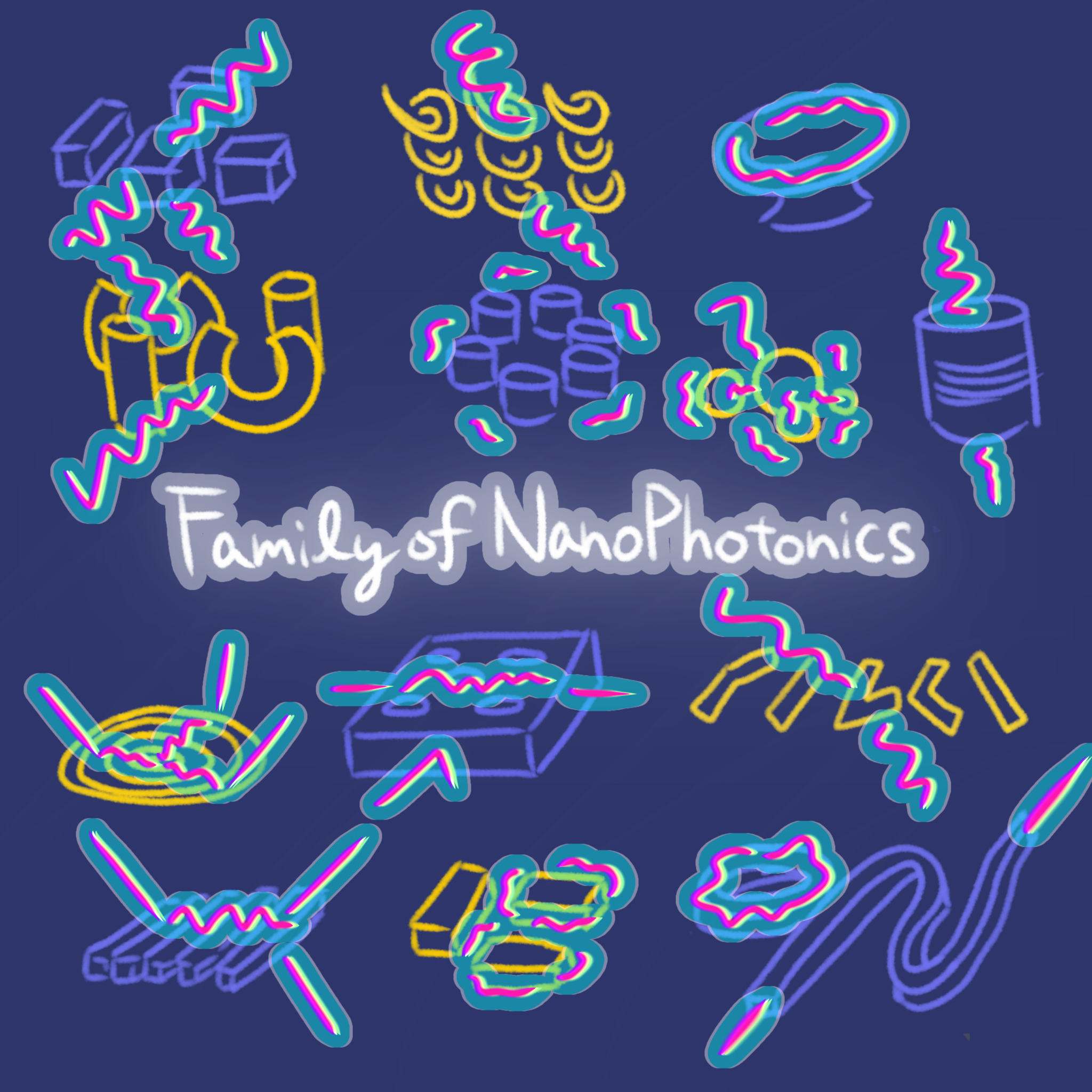
Recent advances in nanofabrication technology have enabled the fabrication of artificial structures with feature sizes comparable to the wavelength of light (hundreds of nanometers). Meta-optics and nanophotonics aim to manipulate light by designing such subwavelength structures. Our research focuses on photonic crystals, metamaterials, and metasurfaces, which have been developed by incorporating concepts from condensed matter physics. These artificial optical structures not only provide new functionalities for conventional optical components such as lenses and mirrors, but also offer promising applications in optical communications, optical computing, and next-generation photonic devices. In our laboratory, we investigate novel optical physics and functionalities using metasurfaces and photonic crystals.
Research Interests
Non-Hermitian Photonics
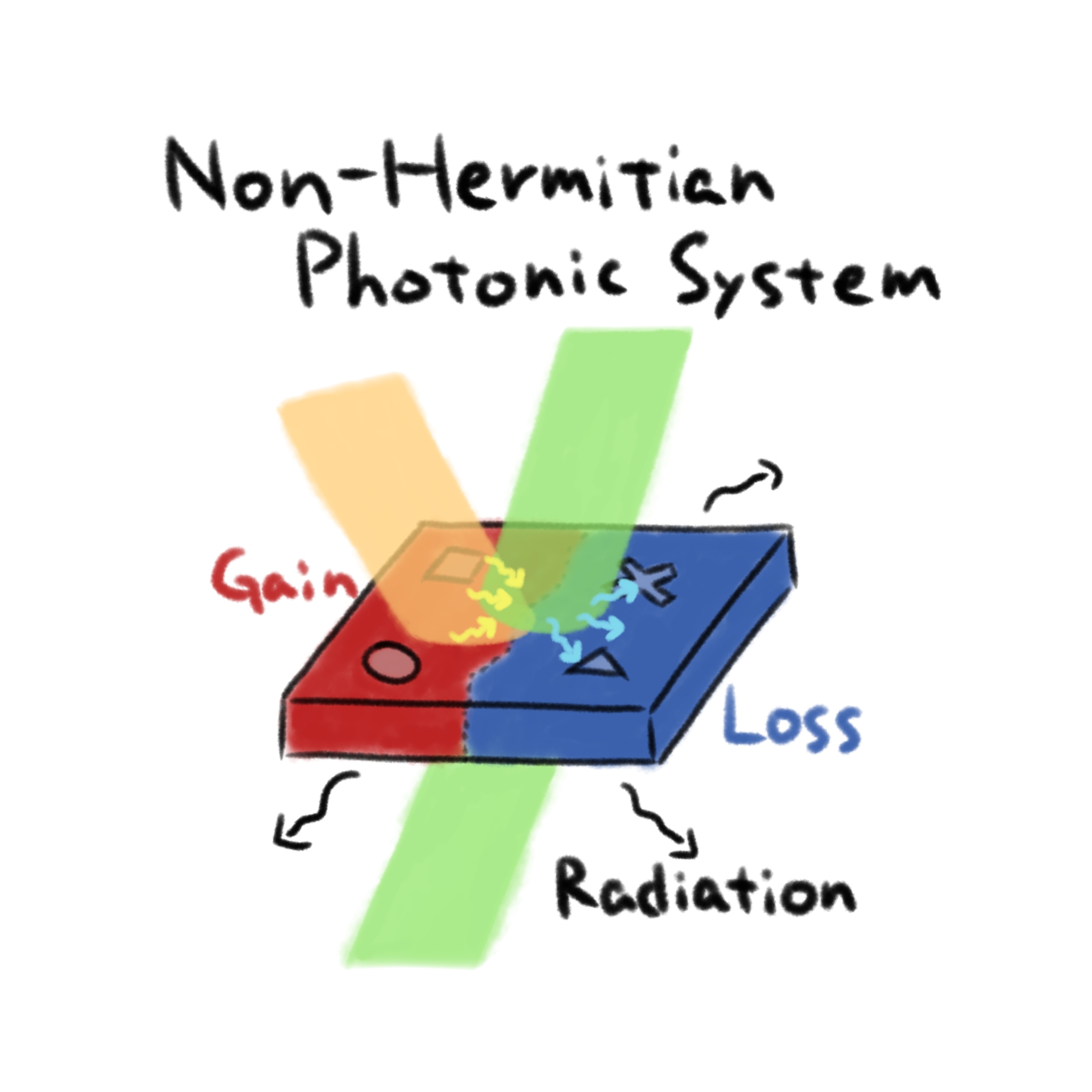
Conventional condensed matter physics has primarily dealt with Hermitian systems, where energy is conserved. In contrast, non-Hermitian systems, in which energy exchange with the environment occurs, have recently attracted considerable attention because they exhibit unique phenomena that have no counterparts in Hermitian systems. Nanophotonic structures are inherently non-Hermitian due to radiation and absorption losses, making them an ideal platform for exploring non-Hermitian physics. Furthermore, many non-Hermitian effects, such as asymmetric optical responses depending on the direction of light incidence, can be directly utilized as useful optical functionalities, making this an active area of research.
Topological Photonics

Topological photonics is a research field that applies concepts from topology to nanophotonic systems. Topology is a branch of mathematics that studies properties that remain unchanged under continuous deformation, regardless of the detailed shape of an object. From a topological viewpoint, for example, a doughnut and a coffee mug are considered equivalent because they both have one hole. Such topological concepts explain the remarkable properties of topological insulators, which conduct electricity only at their surfaces or edges while remaining insulating in the bulk. By applying these ideas to photonic systems, researchers have realized photonic topological insulators and various robust optical phenomena and functionalities.
Optical Physics in Aperiodic and Quasiperiodic Systems
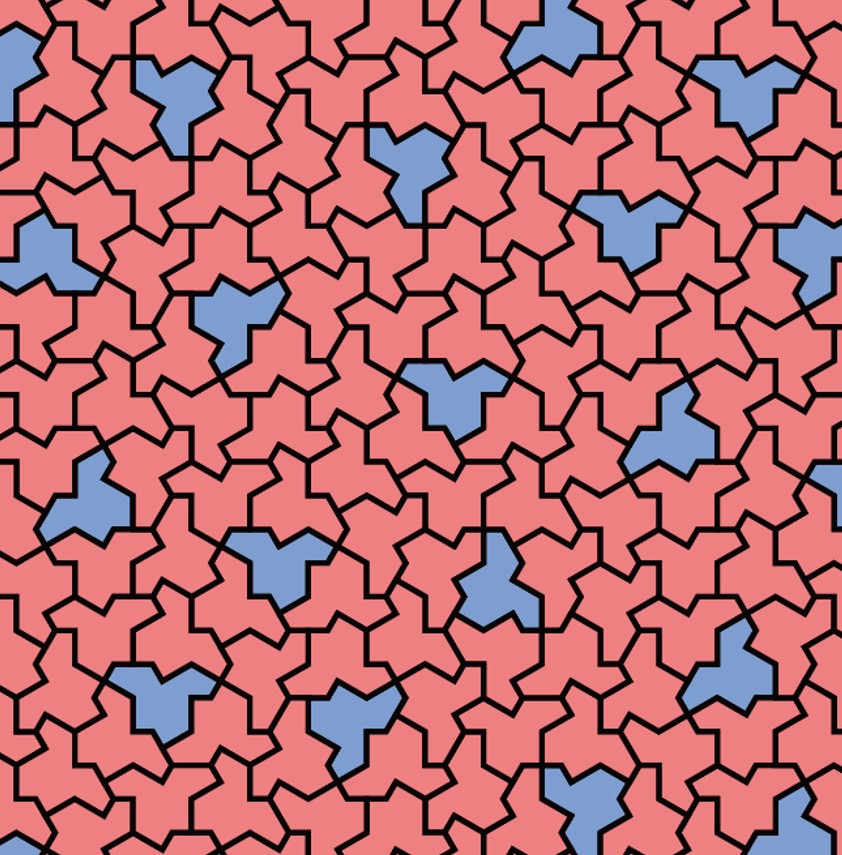
Most research in nanophotonics has focused on periodic structures because they are relatively straightforward to design, fabricate, and analyze. Consequently, periodic systems have been extensively studied across many scientific disciplines. In contrast, aperiodic and quasiperiodic systems, represented by quasicrystals, exhibit fascinating physical properties that cannot be found in periodic structures. Our research explores these unique optical phenomena in nanophotonic systems and aims to develop novel optical functionalities based on aperiodic architectures.
Research Projects
Non-Hermitian Physics Using Nanophotonic Structures
Phys. Rev. Lett. 137, 046903 (2026).
Phys. Rev. A 112, 053501 (2025).
Phys. Rev. Res. 7, 033214 (2025).
Phys. Rev. A 111(3), 033513 (2025).
ACS Photonics 10(3), 667 (2023).
